
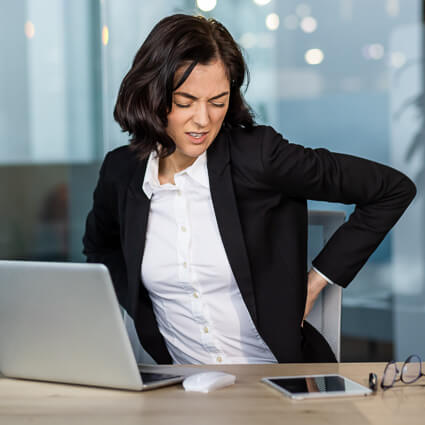
Low Back Pain Relief in Colorado Springs
Don’t Let Low Back Pain Keep You From Doing What You Love
Your lower back is involved in almost everything you do, from walking and exercising to sitting at work, picking up your kids, or chasing down whatever you love doing on the weekend. When discomfort creeps in, even simple movements start to feel like a chore.
Most people try to push through the soreness and wait for it to pass. But symptoms that keep coming back are often a sign that something isn’t moving or functioning the way it should.
Hexis Chiropractic starts with understanding what’s actually contributing to your condition. We don’t just look at where it hurts. We look at how your spine, muscles, movement patterns, and daily habits are affecting your overall function.
Maybe your symptoms started after an injury. Maybe they built up slowly from repetitive stress until they became part of your daily routine. Either way, our team takes the time to understand your concerns before recommending care.
How the Lumbar Spine Functions
Your lower back, or lumbar spine, gives you the strength and flexibility behind nearly every movement you make. It carries much of your body’s weight while still letting you bend, lift, twist, and stay active.
Vertebrae, discs, muscles, ligaments, joints, and nerves all work together here to keep you moving comfortably. Because this area absorbs so much daily stress, it’s one of the most common places for stiffness and discomfort to show up.
Symptoms look different from person to person. Some people deal with occasional soreness. Others find it’s affecting their sleep, their workouts, or their ability to get through a normal workday. Bending, lifting, twisting, or just getting comfortable after sitting can all become harder than they used to be. Muscle tightness, pain that spreads into the hips or buttocks, or tingling and numbness down the legs can sometimes point to irritation involving nearby structures.
Everyday Habits That May Strain the Lower Back
Most cases don’t trace back to one single event. They build up from daily stress, repetitive movements, posture habits, and old injuries, all stacking on top of each other.
Common contributors include:
- Sitting for long periods at work or while driving
- Poor posture while using computers or electronic devices
- Lifting objects incorrectly
- Repetitive work activities
- Sports and exercise-related injuries
- Muscle weakness or limited flexibility
- Auto accidents and whiplash injuries
- Sleeping positions that place stress on the spine
- Age-related changes in the spine
Even things that seem harmless can add up over time. Hours of sitting, frequent bending, lifting the wrong way, and exercising with poor form all place extra stress on the muscles and joints of the lumbar spine.
When It’s Time for an Evaluation
Some soreness after physical activity is normal. Symptoms that keep coming back or getting worse are not something to shrug off. If standing up after sitting is getting harder, your flexibility feels reduced, bending or lifting brings on discomfort, pain is waking you up at night, or symptoms are reaching into your hips or legs, an evaluation can help pinpoint what’s going on. Catching it early often keeps a minor issue from turning into a persistent one.
Care Based on Your Findings
Every patient starts with a detailed consultation and examination. Dr. Peter reviews your health history, posture, movement patterns, spinal function, and the activities that may be feeding into your symptoms, then builds a care recommendation around your findings, goals, and lifestyle.
Depending on your needs, care may include:
- Chiropractic adjustments
- Soft tissue therapy
- Stretching and strengthening exercises
- Posture guidance
- Ergonomic recommendations
- Home movement strategies
When appropriate, chiropractic care may help improve mobility, ease stiffness and muscle tension, and encourage healthier movement patterns, so everyday activities start feeling normal again.
When Symptoms Extend Beyond the Lower Back
Sometimes the discomfort doesn’t stay in the lower back. It can travel into the hips or legs when structures in the lumbar spine start affecting nearby nerves, causing sciatica pain or other issues.
That might show up as aching down into the lower extremities, tingling, numbness, burning, or changes in strength or sensation. A thorough evaluation helps determine whether the lumbar spine, surrounding muscles, or nearby nerves are involved, so care recommendations are based on what’s actually causing the problem.
Managing Lower Back Changes During Pregnancy
Pregnancy changes posture, balance, and weight distribution, and all of that places new demands on the lower back, pelvis, and surrounding muscles. As your baby grows, things like standing, walking, sleeping, or simply changing positions can start to feel less comfortable.
After a thorough evaluation, each plan is built around the mother’s stage of pregnancy, comfort level, and individual needs. Gentle chiropractic techniques may help improve mobility and ease joint and muscle tension during pregnancy when appropriate.
Helping Young Spines Stay Active
Low back discomfort isn’t just an adult problem. Teenagers deal with it too. Sports, weight training, heavy backpacks, long hours in the classroom, and more time spent on screens can all add stress to a still-developing lumbar spine.
Good posture, proper lifting mechanics, regular movement, and healthy spinal habits early on can help reduce unnecessary strain as teenagers keep growing. If symptoms start interfering with school, sports, or daily life, an evaluation can help identify what’s driving them.
Meet Dr. Peter Harris
Lower back discomfort can come from a lot of different places, including lifting mechanics, posture, changes in spinal movement, and old injuries. Dr. Peter believes figuring out which of those factors is at play is the key to a recommendation that actually fits the patient, instead of running everyone through the same approach.
Dr. Peter earned his Bachelor of Science in Kinesiology from the University of Connecticut before completing his Doctor of Chiropractic degree at Life University. His advanced training in Gonstead, Upper Cervical, and Diversified chiropractic techniques gives him a detailed view of how the spine, joints, muscles, and nervous system work together, and what might be behind reduced mobility and ongoing symptoms.
Frequently Asked Questions
Can chiropractic care help with low back pain?
What are the most common causes of low back pain?
Can low back pain cause pain into the hips or legs?
When should I seek care for low back pain?
Helping You Get Back to Everyday Activities
Ongoing discomfort doesn’t have to be something you just live with. Whether it started after an injury, built up from repetitive movement, or crept in gradually over time, understanding what’s behind it is the first step toward moving more comfortably again.
Schedule an evaluation to learn whether chiropractic care may be appropriate for your needs.
